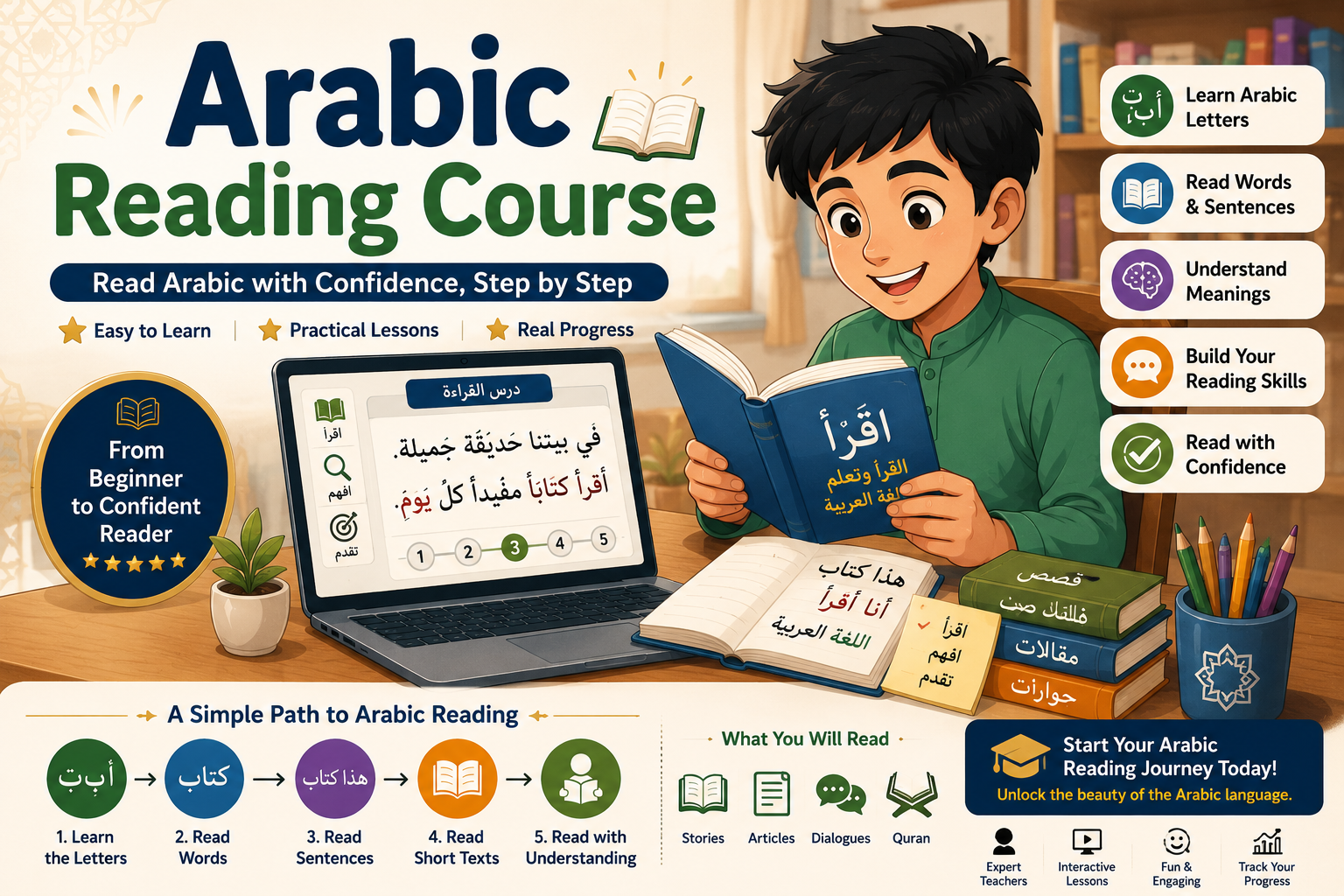
Beginning Arabic feels easier when the first stage is narrow, practical, and consistent. A complete beginner does not need to master grammar, conversation, and literature at once. The stronger starting point is simpler: learn the letters clearly, hear the sounds accurately, read short words with confidence, and begin storing high-frequency vocabulary that appears again and again in lessons, daily speech, and Quran study. That is what good Arabic classes for beginners are designed to do.
Why beginners need a structured class instead of scattered resources
Many new learners start by collecting random videos, apps, printable charts, and social media tips. The problem is not motivation. The problem is sequence. Arabic becomes frustrating when the learner studies letters from one source, words from another, grammar from a third, and pronunciation from none of them in a connected way. A structured class removes that noise. It tells the student what to learn first, what to repeat next, and what can wait until later.
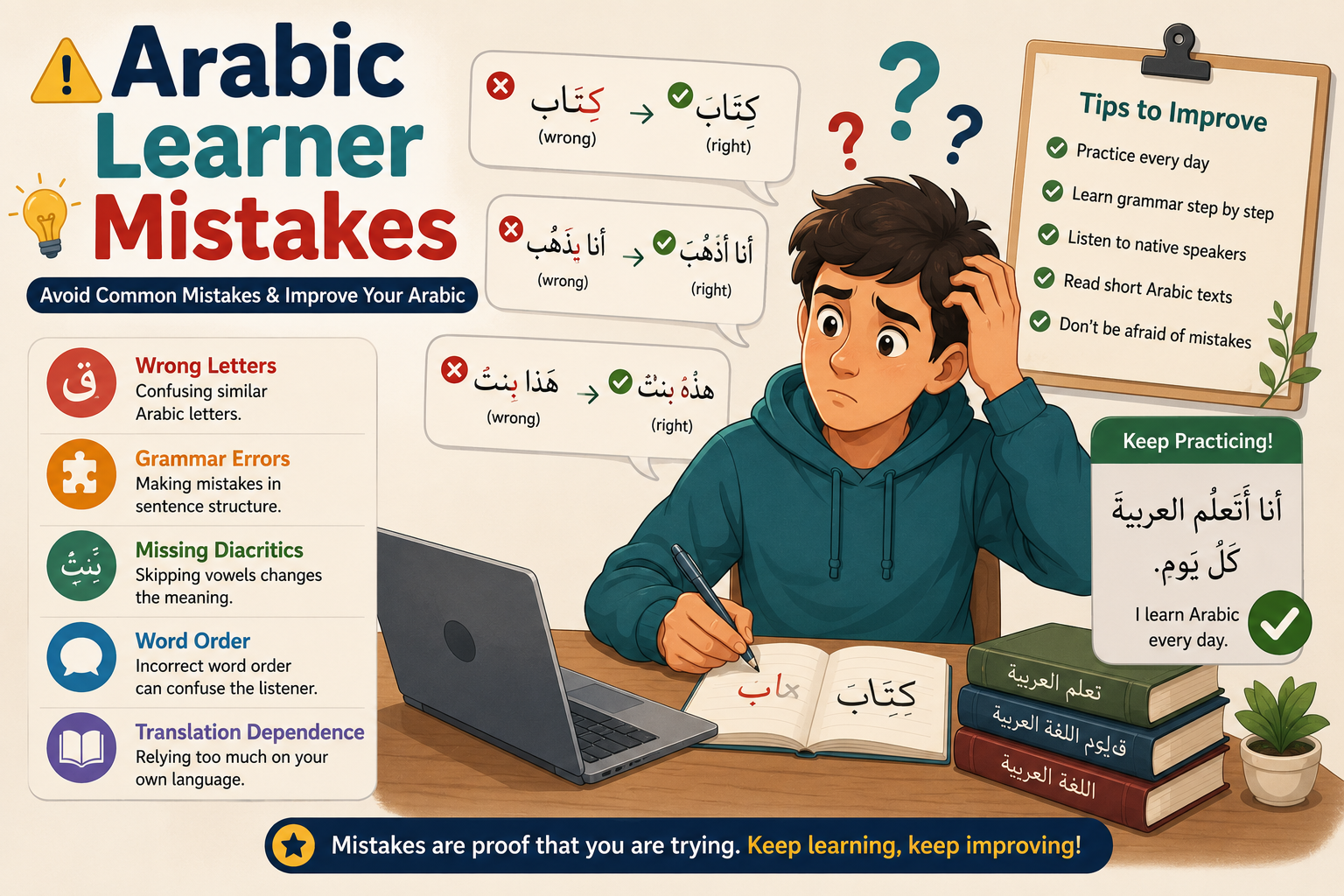
For non-native speakers, that sequence matters even more because Arabic has sounds, writing patterns, and word structures that often do not exist in English or other European languages. A teacher can prevent early mistakes from turning into habits by correcting the sound while the material is still small and manageable.
What a strong beginner Arabic course should cover first
- Alphabet and sound recognition: the student should learn all 28 letters, hear the difference between similar sounds, and practise how the letters change shape at the beginning, middle, and end of words.
- Reading from day one: beginners benefit when they start reading simple syllables and short words early instead of waiting too long before opening the script.
- Essential vocabulary: greetings, family words, classroom language, numbers, colors, and daily verbs give the learner an immediate sense that Arabic is usable.
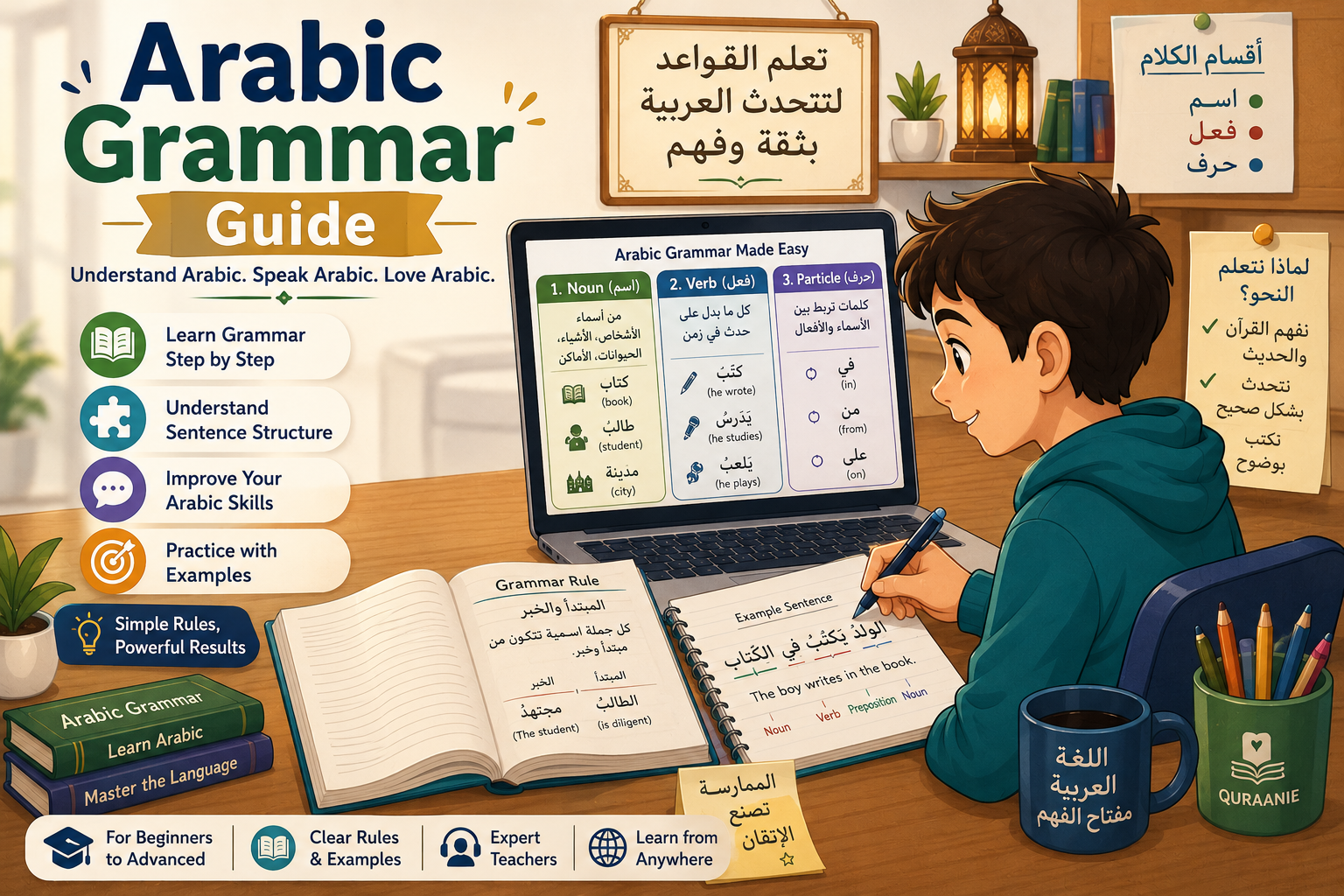
- Simple sentence building: even short patterns such as “this is…”, “I want…”, and “the book is…” help beginners feel movement instead of endless preparation.
- Quranic awareness: many learners begin Arabic because of the Quran, so it helps when the course gently connects letters, reading, and familiar Quranic words from the start.
What progress should look like in the first three months
In the first month, a learner should become familiar with the alphabet, short vowels, and the basic direction of reading. In the second month, the student should be reading short connected words with less hesitation and recognizing a growing set of basic vocabulary. By the third month, the learner should be able to read guided beginner texts, understand simple classroom instructions, and form short predictable sentences. That is meaningful progress. It is not flashy, but it is the kind of progress that makes later grammar and conversation much easier.
Beginners do not need impressive speed. They need a clean foundation that remains stable when the material becomes harder.
How to choose the right Arabic class for a complete beginner
The best beginner class is not the one that promises fluency the fastest. It is the one that combines clear explanation, live correction, patient repetition, and realistic weekly expectations. A good teacher explains why a sound matters, how a letter behaves inside a word, and what to review before the next class. A good course also gives the learner small visible wins. When beginners can hear themselves reading better week by week, motivation becomes easier to protect.
If your goal includes reading the Quran, understanding basic Arabic, or preparing for longer language study, then the best time to begin is with a calm structured course now rather than waiting for the “perfect” schedule. Consistency matters more than intensity at the beginning.